
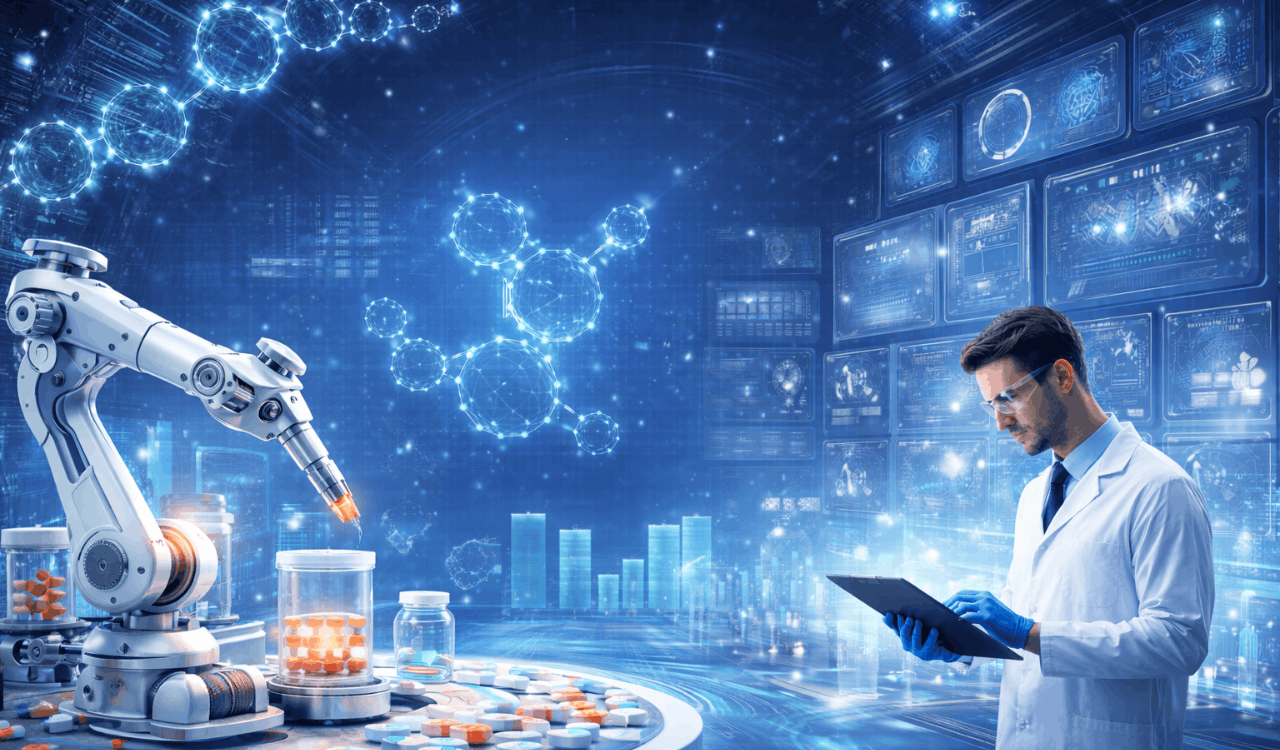
The pharmaceutical industry has witnessed a significant transformation over the past few decades. What was once a largely manual and labour-intensive operation has evolved into a highly advanced, technology-driven ecosystem. Today, innovation and technology in pharmaceutical manufacturing play a vital role in enhancing product quality, improving operational efficiency, reducing production costs, and meeting growing global healthcare demands.
In India, pharmaceutical manufacturing has rapidly adopted advanced technologies, strengthening the country’s position as a trusted global supplier of affordable, high-quality medicines. From automation and digitalisation to artificial intelligence and continuous manufacturing, pharmaceutical manufacturers in India are redefining how medicines are developed, produced, and delivered across international markets.
This blog explores the key innovations and technologies shaping modern pharmaceutical manufacturing, their impact on quality and affordability, and why they are critical to the future of global healthcare.
The Evolution of Pharmaceutical Manufacturing
Traditional pharmaceutical manufacturing relied heavily on manual processes, batch production, and limited real-time monitoring. While effective for its time, this approach posed challenges such as:
- Inconsistent product quality
- Higher production costs
- Longer production timelines
- Limited scalability
With growing global demand and stricter regulatory requirements, pharmaceutical companies have increasingly adopted technology-driven manufacturing solutions to enhance efficiency and reliability.
Role of Innovation in the Pharmaceutical Industry
Innovation in pharmaceutical manufacturing is not limited to drug discovery alone. It extends across:
- Production processes
- Quality control systems
- Supply chain management
- Packaging and distribution
These innovations ensure that medicines reach patients faster, remain affordable, and comply with international quality standards.
Automation in Pharmaceutical Manufacturing
What Is Pharmaceutical Automation?
Automation involves the use of advanced machinery, robotics, and control systems to perform manufacturing tasks with minimal human intervention.
Benefits of Automation
- Improved product consistency
- Reduced human error
- Faster production cycles
- Enhanced worker safety
Automated systems are widely used for tablet compression, capsule filling, liquid filling, labelling, and packaging, making pharmaceutical manufacturing more precise and scalable.
Digitalisation and Smart Manufacturing
Digital Transformation in Pharma
Digital technologies are revolutionising pharmaceutical manufacturing by enabling data-driven decision-making. Smart manufacturing integrates software, sensors, and analytics to monitor production in real time.
Key Digital Technologies Used
- Manufacturing Execution Systems (MES)
- Internet of Things (IoT) sensors
- Cloud-based data management
- Digital twins
These tools help manufacturers optimise processes, predict equipment failures, and ensure compliance with regulatory guidelines.
Artificial Intelligence and Machine Learning in Pharma
AI-Driven Process Optimisation
Artificial intelligence (AI) and machine learning (ML) are increasingly used to analyse large datasets generated during manufacturing. These technologies help:
- Optimise formulations
- Predict quality deviations
- Reduce production downtime
Enhancing Quality Control
AI-powered inspection systems can detect defects in tablets, capsules, and packaging with greater accuracy than manual checks, ensuring consistent product quality.
What Is Continuous Manufacturing?
Continuous manufacturing is an advanced production approach in which a pharmaceutical drug is manufactured through a consistent, uninterrupted process, unlike traditional batch-based methods that operate in separate stages.
Advantages of Continuous Manufacturing
- Shorter production timelines
- Reduced operational and manufacturing costs
- Enhanced product quality and consistency
- Faster availability of medicines in the market
This modern manufacturing approach is gaining widespread adoption as it meets stringent regulatory requirements and supports efficient, large-scale pharmaceutical manufacturing.
Advanced Quality Control and Compliance Technologies
Process Analytical Technology (PAT)
PAT tools allow real-time monitoring of critical quality attributes during production. This ensures:
- Early detection of deviations
- Reduced wastage
- Consistent product performance
Meeting Global Regulatory Standards
Modern pharmaceutical manufacturing facilities leverage technology to comply with:
- WHO-GMP guidelines
- US FDA regulations
- EU GMP standards
Technology-enabled documentation and audit trails make compliance more transparent and efficient.
Role of Biotechnology and Advanced Formulation Technologies
Innovations in Drug Formulations
Advancements in formulation science have enabled the development of:
- Modified-release dosage forms
- Targeted drug delivery systems
- Biosimilars and biologics
These innovations improve therapeutic outcomes while maintaining cost efficiency.
Biotechnology in Manufacturing
Biotechnology plays a vital role in producing vaccines, biologics, and complex therapies, further expanding the scope of modern pharmaceutical manufacturing.
Sustainable and Green Manufacturing Technologies
Focus on Environmental Responsibility
Sustainability has become a key priority for pharmaceutical manufacturers. Green manufacturing practices include:
- Energy-efficient equipment
- Reduced water consumption
- Waste minimisation
- Eco-friendly packaging
Benefits of Sustainable Manufacturing
- Lower environmental impact
- Reduced operating costs
- Improved corporate responsibility
Innovation in sustainability ensures that pharmaceutical growth aligns with environmental protection.
Supply Chain Innovation and Traceability
Digital Supply Chain Management
Advanced supply chain technologies improve transparency and efficiency by enabling:
- Real-time inventory tracking
- Demand forecasting
- Counterfeit prevention
Ensuring Medicine Authenticity
Technologies such as barcoding and blockchain help maintain product traceability, ensuring patient safety and regulatory compliance.
India’s Role in Technology-Driven Pharmaceutical Manufacturing
India has emerged as a global leader by combining innovation with cost-effective manufacturing. Indian pharmaceutical companies invest heavily in:
- Modern production facilities
- Skilled technical workforce
- Research and development
This enables them to deliver high-quality medicines at affordable prices while meeting international market demands.
Challenges in Adopting Advanced Technologies
Despite the benefits, pharmaceutical manufacturers face challenges such as:
- High initial investment costs
- Need for skilled manpower
- Integration with legacy systems
- Regulatory adaptation
However, long-term benefits far outweigh these challenges, making technology adoption essential for sustainable growth.
The Future of Pharmaceutical Manufacturing
The future of pharmaceutical manufacturing lies in:
- Increased automation
- Greater use of AI and data analytics
- Expansion of continuous manufacturing
- Stronger focus on sustainability
Innovation will continue to drive efficiency, quality, and affordability across the pharmaceutical industry.
Why Innovation and Technology Matter in Pharma Manufacturing
In summary, innovation and technology in pharmaceutical manufacturing:
- Improve the quality and safety
- Reduce production costs
- Ensure regulatory compliance
- Support global healthcare needs
They are essential for building resilient healthcare systems and ensuring long-term industry growth.
Frequently Asked Questions (FAQs)
1. What is modern pharmaceutical manufacturing?
It refers to technology-driven processes that use automation, digital systems, and advanced quality control to produce medicines efficiently and safely.
2. How does automation benefit pharmaceutical manufacturing?
Automation improves consistency, reduces errors, speeds up production, and enhances compliance with quality standards.
3. Why is AI important in pharmaceutical manufacturing?
AI helps optimise processes, predict quality issues, and improve inspection accuracy, leading to better efficiency and product quality.
4. What is continuous manufacturing in pharma?
It is a production method where medicines are manufactured continuously rather than in batches, offering faster and more cost-effective production.
5. How does technology support affordable medicines?
By improving efficiency, reducing wastage, and optimising production, technology helps lower manufacturing costs and supports affordable healthcare.
Call to Action (CTA)
Choose Jefferson Pharma India for advanced, reliable, and affordable pharmaceutical manufacturing.
Contact us today to discuss partnership opportunities.