
Quick Answer
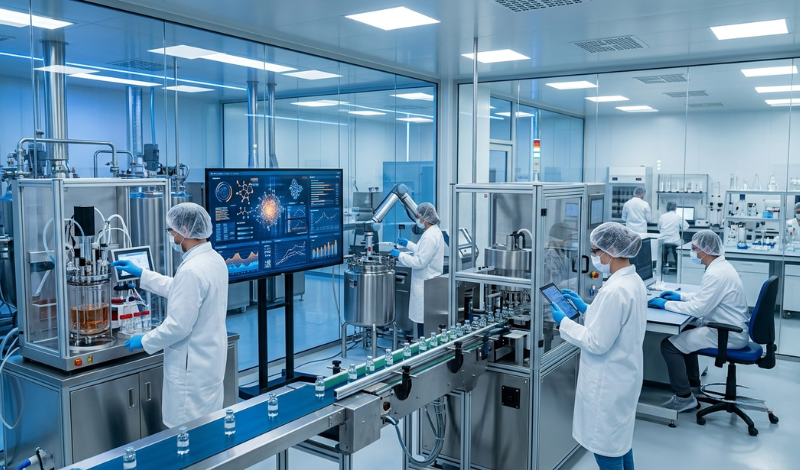
Technology is transforming the pharmaceutical industry by improving how medicines are researched, developed, manufactured, monitored, and distributed. Digital systems, automation, artificial intelligence, advanced analytics, and connected technologies are helping pharmaceutical businesses improve operational efficiency while maintaining quality and safety standards.
These developments are also changing how pharmaceutical companies respond to evolving healthcare needs. From modern manufacturing facilities to patient-focused solutions, technology is creating opportunities to build more reliable, efficient, and responsive pharmaceutical supply chains.
Why technology matters in pharmaceuticals
- Improves efficiency and consistency across pharmaceutical operations.
- Supports better quality control and manufacturing processes.
- Enables data-driven decision-making.
- Helps identify operational and supply chain risks.
- Supports advanced drug development and manufacturing.
- Improves medicine traceability and supply chain visibility.
- Creates opportunities for more patient-focused treatment solutions.
Technology adoption, however, needs to be supported by appropriate validation, employee training, regulatory compliance, data security, and strong quality management systems.
Understanding the Major Technology Trends Transforming Pharmaceuticals
The pharmaceutical industry is experiencing a major technological shift across research, manufacturing, quality control, logistics, and healthcare delivery. Pharmaceutical technology trends are influencing how companies manage complex processes while improving accuracy, efficiency, and operational visibility.
Artificial intelligence and machine learning are being explored across drug discovery, clinical research, data analysis, and quality management. By processing large amounts of information, these technologies can help researchers and pharmaceutical professionals identify patterns and make more informed decisions.
Automation is another significant development. Automated production equipment, robotics, and digital process controls can reduce manual intervention and improve consistency in repetitive manufacturing activities. These systems can also help pharmaceutical facilities monitor production parameters more effectively.
Other important developments include:
- Artificial intelligence and machine learning
- Internet of Things (IoT) monitoring
- Automated pharmaceutical manufacturing
- Digital quality management systems
- Predictive maintenance technologies
- Advanced analytical equipment
- Electronic batch documentation
- Track-and-trace systems
The value of these technologies depends on how effectively they are integrated into existing pharmaceutical quality systems. Companies must ensure that new technologies are properly validated and that employees understand how to use and monitor them.
A balanced approach allows pharmaceutical businesses to gain the advantages of digital transformation while maintaining the quality, safety, and regulatory standards expected across the industry.
How Digital Innovation Is Improving Pharmaceutical Manufacturing
Modern pharmaceutical manufacturing requires high levels of precision, consistency, and quality control. As production processes become increasingly sophisticated, digital technologies are helping manufacturers improve visibility across their operations and identify potential issues at an earlier stage.
Real-time production monitoring allows manufacturing teams to collect and review operational data throughout different stages of production. This can help identify deviations, monitor equipment performance, and support faster corrective actions when necessary.
Predictive maintenance is another useful application. By monitoring equipment conditions and performance patterns, manufacturers can identify potential maintenance requirements before equipment failure causes significant production interruptions.
At the same time, pharma innovations are extending beyond production machinery. Developments in drug delivery, pharmaceutical formulation, packaging, analytical testing, and supply chain management are helping companies respond to increasingly complex healthcare requirements.
Some emerging applications include:
- Smart manufacturing systems
- Automated quality inspections
- Real-time production monitoring
- Digital inventory management
- Predictive analytics
- Connected laboratory equipment
- Advanced drug delivery systems
- Electronic documentation
These technologies can support better manufacturing efficiency and product consistency, but implementation requires appropriate infrastructure, trained professionals, validation procedures, and quality oversight.
For pharmaceutical organisations serving domestic and international markets, combining technological development with strong manufacturing and regulatory practices can create a more resilient foundation for sustainable growth.
Technology, Patient-Centered Medicines, and Better Treatment Experiences
The pharmaceutical industry is increasingly focusing on the overall patient experience rather than concentrating only on medicine development and production. Technology can support this approach by making treatment information more accessible and helping healthcare professionals understand how medicines are being used.
Digital health platforms, medication reminders, connected devices, and patient-support technologies can assist individuals in following prescribed treatment schedules. These solutions can be particularly useful for people managing long-term therapies where consistent medicine use is important.
Improving patient compliance pharma strategies can involve convenient dosage forms, clearer packaging, digital reminders, patient education, and structured support programmes. Pharmaceutical companies are increasingly considering these factors because treatment outcomes can depend not only on the availability of a medicine but also on its appropriate and consistent use.
Technology can contribute to patient-focused pharmaceutical development through:
- Easier-to-use dosage forms
- Digital medication reminders
- Patient education platforms
- Connected health monitoring devices
- Personalised treatment support
- Improved pharmaceutical packaging
- Patient assistance programmes
The objective should not be to introduce technology simply because it is available. Instead, pharmaceutical companies should identify solutions that offer meaningful benefits to patients while considering accessibility, affordability, privacy, safety, and regulatory requirements.
A patient-centred approach can improve communication between pharmaceutical companies, healthcare professionals, and patients while supporting better treatment experiences.
The Role of Technology in India’s Growing Pharmaceutical Sector
India has established itself as an important pharmaceutical manufacturing and export hub, supplying medicines to healthcare markets around the world. As international competition increases and quality expectations continue to evolve, technology is becoming an increasingly important component of India’s pharmaceutical growth.
Indian pharmaceutical businesses are adopting modern manufacturing systems, advanced analytical equipment, digital quality management platforms, automated production technologies, and supply chain solutions. These systems can help companies improve production consistency while strengthening documentation, monitoring, and traceability.
Technology can also support more efficient resource management. Predictive maintenance can reduce unexpected equipment downtime, while process monitoring can provide manufacturing teams with greater control over production activities. Digital supply chain platforms can improve visibility into inventory, transportation, and distribution processes.
Key areas where technology can strengthen India’s pharmaceutical capabilities include:
- Advanced pharmaceutical manufacturing
- Quality control and laboratory testing
- Digital supply chain management
- Regulatory documentation
- Medicine traceability
- Automated production
- Research and development
- Pharmaceutical export operations
However, adopting new technology requires careful planning. Pharmaceutical companies need to assess whether a particular solution is suitable for their production environment, regulatory requirements, workforce, infrastructure, and long-term objectives.
The combination of India’s established pharmaceutical expertise and continued investment in modern technologies can help the country strengthen its contribution to global medicine supply chains.
Preparing Pharmaceutical Businesses for the Future
The future of pharmaceuticals will increasingly depend on the interaction between technology, scientific research, manufacturing expertise, regulatory compliance, and changing patient expectations. Businesses that carefully evaluate emerging technologies can identify opportunities to improve efficiency without compromising quality or safety.
Workforce development will remain an important consideration. Employees need appropriate training to operate automated systems, interpret manufacturing data, manage digital platforms, and follow updated quality procedures. Technology investments are most effective when supported by skilled and knowledgeable teams.
Cybersecurity is also becoming increasingly important as pharmaceutical facilities become more digitally connected. Protecting manufacturing information, intellectual property, operational systems, and sensitive data should be an integral part of digital transformation.
Pharmaceutical organisations should focus on:
- Evaluating technology based on measurable business requirements
- Maintaining robust quality management systems
- Training employees on new technologies
- Strengthening data security
- Supporting regulatory compliance
- Improving supply chain visibility
- Monitoring relevant manufacturing developments
Rather than adopting every emerging technology, pharmaceutical businesses should prioritise solutions that provide measurable improvements in quality, efficiency, reliability, and patient support.
Frequently Asked Questions (FAQs)
What are the major technology trends in the pharmaceutical industry?
Major developments include artificial intelligence, automation, IoT monitoring, predictive analytics, digital quality systems, advanced manufacturing technologies, and improved medicine traceability.
How is technology improving pharmaceutical manufacturing?
Technology can improve production efficiency, process monitoring, equipment performance, quality control, documentation, and supply chain visibility while helping manufacturers identify operational risks.
How can technology support better patient treatment experiences?
Digital reminders, patient education platforms, connected devices, convenient dosage forms, and patient-support systems can help individuals better understand and follow their prescribed treatment plans.
Why is automation important in pharmaceutical manufacturing?
Automation can improve process consistency, reduce repetitive manual activities, minimise certain human errors, and provide manufacturers with greater control over production processes.
How is technology strengthening India’s pharmaceutical industry?
Technology is helping Indian pharmaceutical businesses modernise manufacturing, improve quality systems, strengthen supply chain visibility, support regulatory requirements, and compete more effectively in international markets.
The pharmaceutical industry is entering a period where technology and scientific expertise will increasingly work together to improve the way medicines are developed, manufactured, monitored, and distributed. Artificial intelligence, automation, digital quality systems, advanced manufacturing, and patient-focused technologies are creating opportunities for greater efficiency and reliability throughout the pharmaceutical value chain.
For India’s pharmaceutical sector, continued investment in technology, skilled professionals, quality systems, and modern infrastructure can support long-term growth in domestic and international markets. The ability of pharma manufacturing companies in India to combine technological advancement with strong quality standards, regulatory compliance, and patient-focused practices will remain an important factor in strengthening India’s position within the global pharmaceutical industry.