
Quick Answer
Pharmaceutical manufacturing requires strict controls to ensure medicines are produced consistently, safely, and according to established quality standards. Good Manufacturing Practices (GMP) provide a structured framework covering manufacturing processes, quality control, personnel, equipment, documentation, storage, and facility management.
For pharmaceutical manufacturers and exporters, implementing effective GMP systems can help minimize contamination risks, maintain product consistency, strengthen regulatory compliance, and support access to international healthcare markets.
Why GMP matters in pharmaceutical manufacturing
- Helps maintain consistent pharmaceutical product quality.
- Reduces risks associated with contamination and manufacturing errors.
- Supports controlled and standardized production processes.
- Strengthens quality assurance and documentation.
- Helps pharmaceutical businesses meet regulatory expectations.
- Improves confidence among distributors and healthcare organizations.
- Supports pharmaceutical exports to regulated international markets.
GMP compliance is not limited to a single stage of manufacturing. It involves continuous monitoring, documentation, employee training, equipment maintenance, quality testing, and process improvement throughout the pharmaceutical production lifecycle.
Understanding GMP Pharmaceutical Manufacturing and Its Importance
A GMP pharma manufacturer operates according to established Good Manufacturing Practice principles designed to ensure that medicines are consistently produced and controlled according to appropriate quality standards. These practices cover multiple aspects of pharmaceutical manufacturing, from raw material handling and production to testing, packaging, storage, and final product release.
GMP systems are designed to reduce risks that could affect pharmaceutical product quality. Manufacturing facilities typically establish documented procedures for production activities, equipment cleaning, personnel hygiene, material handling, quality testing, and deviation management.
Important elements of GMP-focused manufacturing include:
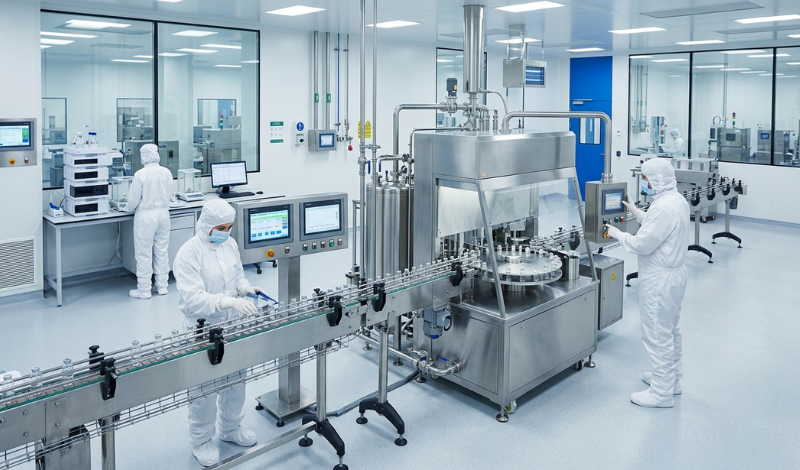
- Controlled manufacturing environments
- Qualified personnel and continuous training
- Validated manufacturing processes
- Raw material quality control
- Equipment qualification and maintenance
- In-process quality monitoring
- Laboratory testing
- Batch documentation and traceability
- Corrective and preventive action systems
Documentation is another essential component. Accurate records allow manufacturers to demonstrate that production activities have been performed according to approved procedures. Complete documentation also supports traceability when investigating deviations or addressing quality-related concerns.
GMP principles therefore provide more than a regulatory framework. They create a systematic approach to maintaining quality throughout pharmaceutical manufacturing and help organizations establish reliable processes that can be consistently monitored and improved.
The Role of API Manufacturing in Pharmaceutical Product Quality
Active Pharmaceutical Ingredients (APIs) are the substances responsible for producing the intended therapeutic effect of a medicine. The quality, purity, consistency, and stability of an API can directly influence the quality of the finished pharmaceutical product.
An API manufacturing company must therefore maintain appropriate controls throughout the production process. This can include raw material qualification, controlled processing conditions, analytical testing, impurity monitoring, documentation, and storage under suitable conditions.
API manufacturing involves several important quality considerations, including:
- Selection and testing of raw materials
- Controlled chemical or biological processes
- Process monitoring and validation
- Impurity and contamination control
- Analytical testing
- Batch consistency
- Appropriate storage conditions
- Detailed manufacturing documentation
Modern API production may also involve advanced process technologies and analytical tools that help manufacturers monitor critical parameters and improve manufacturing efficiency.
Strong API quality systems are particularly important because APIs become a fundamental component of finished medicines. Consistent API production can support manufacturers in achieving predictable product performance while helping them meet applicable regulatory and quality requirements.
For pharmaceutical businesses sourcing APIs or finished formulations, understanding the manufacturing partner’s quality systems, technical capabilities, testing infrastructure, and documentation practices can be important when evaluating long-term supply relationships.
How Certified Pharmaceutical Exporters Support Global Medicine Supply
Pharmaceutical exports require coordination between manufacturing, quality assurance, regulatory documentation, packaging, logistics, and destination-market requirements. A GMP-certified exporter can provide additional assurance that pharmaceutical manufacturing and quality processes are aligned with recognized GMP principles.
Certification and regulatory compliance can be important considerations for international buyers because pharmaceutical markets may have specific requirements concerning product quality, documentation, manufacturing standards, labeling, registration, and import procedures.
Reliable pharmaceutical exporters typically maintain processes for:
- Product quality documentation
- Batch traceability
- Certificates and regulatory records
- Product packaging and labeling
- Export documentation
- Storage and transportation
- Destination-market requirements
- Customer and regulatory communication
International pharmaceutical supply also requires careful attention to transportation and storage conditions. Certain medicines may require temperature-controlled environments or specialized handling to maintain their quality during transit.
Exporters with established quality and documentation systems can help make international procurement more organized and transparent. However, buyers should always verify the applicable certifications, licenses, product registrations, and regulatory requirements relevant to their specific market.
Building long-term international supply relationships depends on consistent product quality, reliable communication, transparent documentation, and the ability to meet agreed specifications.
India’s Growing Role in GMP Pharmaceutical Manufacturing and Exports
India has established itself as a major pharmaceutical manufacturing and export destination, supplying medicines and pharmaceutical products to healthcare markets across the world. Its manufacturing infrastructure, technical expertise, broad product portfolio, and established regulatory capabilities have contributed to the country’s position in global pharmaceutical supply.
GMP-based manufacturing is an important part of India’s pharmaceutical ecosystem. Manufacturers serving domestic and international markets need robust quality systems that support consistent production and compliance with applicable regulatory requirements.
India’s pharmaceutical manufacturing capabilities span multiple areas, including:
- Finished pharmaceutical formulations
- Active Pharmaceutical Ingredients
- Injectable medicines
- Tablets and capsules
- Oral pharmaceutical formulations
- Specialty medicines
- Contract manufacturing
- Pharmaceutical exports
Modern manufacturing facilities are increasingly adopting automation, digital quality systems, advanced analytical equipment, and improved process monitoring technologies. These developments can help manufacturers improve operational efficiency while maintaining appropriate quality controls.
For international buyers, evaluating an Indian pharmaceutical partner should involve more than considering product pricing. Manufacturing infrastructure, quality systems, regulatory experience, testing capabilities, documentation, production capacity, and export expertise should all be assessed.
India’s continued investment in pharmaceutical manufacturing and quality infrastructure can help strengthen its role as a reliable source of medicines for global healthcare markets.
Preparing Pharmaceutical Manufacturing for Future Quality Requirements
The pharmaceutical industry continues to evolve as regulatory expectations, technology, healthcare requirements, and international supply chains become increasingly complex. Manufacturers must therefore maintain a continuous focus on quality improvement rather than treating compliance as a one-time objective.
Technology is expected to play an increasing role in pharmaceutical quality management. Automated monitoring, digital documentation, data analytics, predictive maintenance, and connected manufacturing systems can provide manufacturers with greater visibility into production processes.
However, technology must operate alongside strong quality systems and appropriately trained personnel. Employees need to understand manufacturing procedures, documentation requirements, equipment operation, quality controls, and deviation management.
Future-focused pharmaceutical manufacturers should prioritize:
- Continuous GMP compliance
- Employee training and development
- Process validation and monitoring
- Advanced quality control systems
- Data integrity and cybersecurity
- Reliable supplier qualification
- Supply chain risk management
- Regulatory preparedness
A strong quality culture also requires pharmaceutical organizations to identify potential risks before they affect product quality. Preventive approaches, regular audits, corrective actions, and continuous process improvement can help organizations maintain consistent standards.
As pharmaceutical markets become increasingly global, manufacturers and exporters that combine reliable production capabilities with strong quality systems will be better positioned to meet international requirements and build sustainable healthcare partnerships.
Frequently Asked Questions (FAQs)
What is a GMP pharma manufacturer?
A GMP pharma manufacturer produces pharmaceutical products according to Good Manufacturing Practice principles covering production, quality control, documentation, personnel, equipment, storage, and other quality-related processes.
Why is GMP important for pharmaceutical manufacturing?
GMP helps ensure medicines are consistently produced and controlled according to established quality standards while reducing risks associated with contamination, errors, and inconsistent manufacturing processes.
What does an API manufacturing company produce?
An API manufacturing company produces active pharmaceutical ingredients, which are the substances in medicines responsible for producing their intended therapeutic effects.
Why is pharmaceutical certification important for exporters?
Certification can demonstrate that relevant manufacturing and quality processes meet recognized standards. International buyers should also verify licenses, product registrations, documentation, and destination-market requirements.
Why is India an important pharmaceutical manufacturing and export hub?
India has extensive pharmaceutical manufacturing infrastructure, technical expertise, a broad medicine portfolio, and an established export network serving healthcare markets across numerous countries.
Maintaining pharmaceutical quality requires a continuous commitment to controlled manufacturing, effective quality systems, accurate documentation, trained personnel, and regulatory compliance. GMP principles provide manufacturers with a structured framework for managing these requirements while supporting consistent pharmaceutical production.
As global demand for reliable medicines continues to grow, India’s manufacturing and export capabilities can play an increasingly important role in international healthcare supply. Businesses seeking reliable pharmaceutical partners should evaluate manufacturing infrastructure, quality systems, regulatory expertise, production capabilities, and export experience. Working with an experienced WHO-GMP-certified pharma exporter can further support international buyers seeking quality-focused pharmaceutical supply and compliance with applicable global market requirements.