
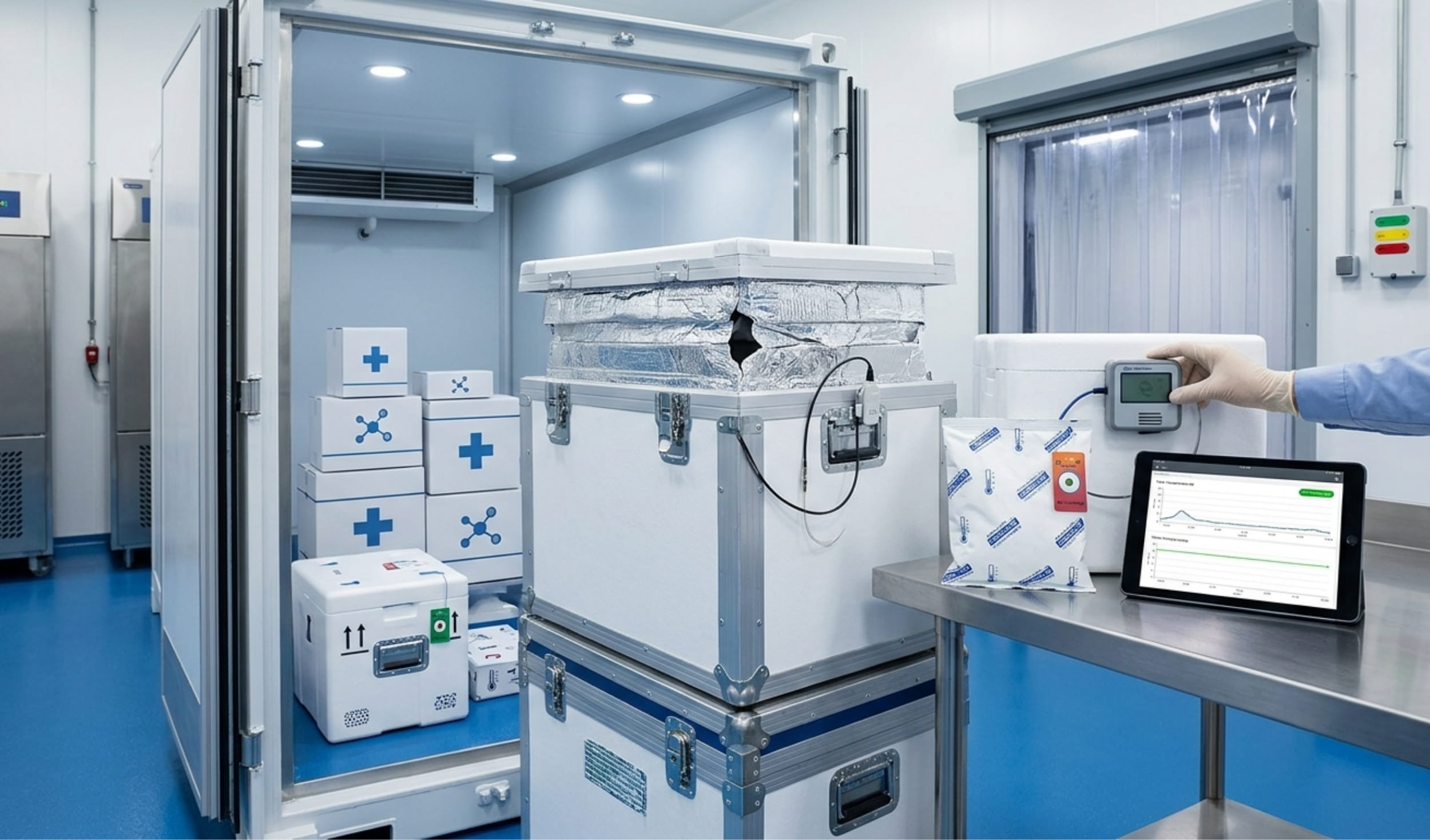
Quick Answer
Effective cold chain pharma logistics is essential for preserving the quality, safety, and effectiveness of temperature-sensitive medicines throughout the pharmaceutical supply chain. From manufacturing facilities to warehouses, transportation networks, and healthcare providers, maintaining the required storage temperature helps prevent product degradation and ensures medicines reach patients in their intended condition.
For pharmaceutical manufacturers, exporters, distributors, hospitals, and healthcare organizations, a reliable cold chain minimizes supply chain risks, supports regulatory compliance, and enables the safe global distribution of sensitive pharmaceutical products.
Why cold chain logistics matters
- Maintains the required storage conditions throughout transportation and storage.
- Preserves medicine stability, potency, and therapeutic effectiveness.
- Reduces the risk of product spoilage and temperature-related damage.
- Supports compliance with international pharmaceutical regulations.
- Enhances patient safety by ensuring medicine quality.
- Strengthens supply chain reliability across domestic and international markets.
- Facilitates the safe distribution of vaccines, biologics, insulin, injectable medicines, and other temperature-sensitive products.
Choosing a pharmaceutical logistics partner should involve evaluating temperature monitoring systems, validated transportation processes, regulatory compliance, infrastructure, and global distribution capabilities rather than focusing solely on transportation costs.
Understanding Cold Chain Pharma Logistics and Its Role in Pharmaceutical Supply Chains
Modern pharmaceutical supply chains depend on specialized logistics systems to protect medicines that require controlled storage conditions. Cold chain pharma logistics refers to the coordinated process of storing, handling, transporting, and distributing pharmaceutical products within specified temperature ranges from the point of manufacture to the final destination.
Many medicines can lose their stability or effectiveness if exposed to temperatures outside their recommended limits. Maintaining an uninterrupted cold chain helps preserve product integrity while reducing the risk of quality failures throughout the distribution process.
An effective cold chain system combines validated storage facilities, temperature-monitored transportation, trained personnel, standardized operating procedures, and continuous documentation to ensure every shipment remains within approved conditions.
Key components of cold chain pharmaceutical logistics include:
- Validated cold storage facilities
- Temperature-controlled transportation
- Continuous temperature monitoring
- Qualified packaging solutions
- Real-time shipment tracking
- Standard operating procedures (SOPs)
- Risk management and contingency planning
- Regulatory documentation and traceability
By maintaining these controls, pharmaceutical companies can deliver products that consistently meet quality expectations while complying with national and international regulatory standards.
Importance of Temperature-Controlled Medicine Handling
Proper temperature-controlled medicine handling plays a critical role in protecting pharmaceutical products from manufacturing through final delivery. Many vaccines, biologics, insulin products, specialty therapies, blood products, and certain injectable medicines require strict temperature management to maintain their quality and effectiveness.
Every stage of handling, including packaging, warehousing, transportation, and distribution, must follow validated procedures that minimize temperature excursions and maintain product stability.
Essential practices for handling temperature-sensitive medicines include:
- Validated insulated packaging systems
- Qualified refrigerated storage facilities
- Continuous digital temperature monitoring
- Regular equipment calibration and maintenance
- Trained logistics and warehouse personnel
- Emergency response procedures for temperature deviations
- Complete shipment documentation and traceability
- Compliance with Good Distribution Practices (GDP)
Proper handling protects medicine potency while reducing product losses, regulatory risks, and supply chain disruptions.
Consistency throughout the logistics process also helps healthcare providers receive medicines in optimal condition, ensuring patients benefit from products that meet established quality and safety standards.
Injectable Pharma Export: Maintaining Sterility and Temperature Integrity Across Borders
The success of an injectable drug export program depends on maintaining both sterility and temperature integrity throughout international transportation. Injectable pharmaceutical products are highly sensitive and require carefully controlled manufacturing, packaging, storage, and distribution processes to prevent contamination or product degradation.
Unlike many conventional medicines, injectable formulations often have narrow storage temperature requirements. Even brief exposure to unsuitable conditions during transit can affect product stability, making validated cold chain management essential for international exports.
To maintain quality during cross-border distribution, exporters typically implement the following:
- Validated cold chain packaging solutions
- Qualified refrigerated transportation
- Continuous temperature data logging
- Sterile handling procedures
- International regulatory documentation
- Customs and import compliance support
- Risk assessment and contingency planning
- Shipment traceability from origin to destination
Maintaining these standards enables pharmaceutical exporters to deliver injectable medicines safely across international markets while meeting importing country requirements and supporting uninterrupted healthcare delivery.
Growth of Pharma Cold Chain in India and Its Role in Global Pharmaceutical Exports
India has become one of the world’s leading pharmaceutical manufacturing and export hubs, creating increased demand for advanced cold chain infrastructure that supports the distribution of temperature-sensitive medicines worldwide.
The country’s expanding pharmaceutical sector has encouraged investment in modern refrigerated warehouses, validated transportation networks, digital monitoring technologies, and specialized logistics providers capable of managing complex pharmaceutical shipments.
Several factors have contributed to the growth of pharmaceutical cold chain capabilities in India:
- Expanding pharmaceutical manufacturing capacity
- Growing exports of biologics and specialty medicines
- Increased investment in refrigerated logistics infrastructure
- Adoption of digital temperature monitoring technologies
- Compliance with international Good Distribution Practices
- Rising demand for global healthcare supply chain reliability
- Strong regulatory oversight supporting export quality
These developments enable Indian pharmaceutical manufacturers and exporters to safely deliver sensitive medicines to healthcare systems across multiple international markets while maintaining product quality throughout the distribution process.
Factors to Consider When Choosing a Pharmaceutical Cold Chain Partner
Selecting a pharmaceutical logistics provider requires evaluating operational capabilities, regulatory compliance, and quality systems rather than transportation costs alone.
Important factors to consider include:
- Validated cold storage infrastructure
- Temperature monitoring and recording systems
- Good Distribution Practice (GDP) compliance
- Experience handling temperature-sensitive medicines
- International shipping and export expertise
- Emergency response and contingency planning
- Shipment traceability and documentation
- Regulatory compliance support
- Reliable transportation network
- Proven quality management systems
Choosing an experienced logistics partner helps reduce supply chain risks while ensuring medicines remain safe, effective, and compliant throughout the distribution journey.
Frequently Asked Questions (FAQs)
What is cold chain pharma logistics?
Cold chain pharma logistics is the process of storing, transporting, and distributing temperature-sensitive pharmaceutical products under controlled temperature conditions to preserve their quality, safety, and effectiveness throughout the supply chain.
Why is temperature-controlled medicine handling important?
Temperature-controlled medicine handling helps maintain medicine stability, prevents degradation, reduces product loss, and ensures pharmaceutical products remain safe and effective until they reach healthcare providers and patients.
Why do injectable medicines require specialized cold chain management?
Injectable medicines are often highly sensitive to temperature fluctuations and contamination. Maintaining sterility and controlled storage conditions throughout transportation helps preserve product quality and regulatory compliance.
How does cold chain management support pharmaceutical exports?
Cold chain management ensures temperature-sensitive medicines remain within validated storage conditions during international transportation, supporting product quality, regulatory compliance, and successful global distribution.
Why is India becoming a major pharmaceutical cold chain hub?
India’s expanding pharmaceutical manufacturing sector, growing export capabilities, investment in refrigerated logistics infrastructure, regulatory expertise, and commitment to quality standards have strengthened its role in the global pharmaceutical cold chain network.
As global demand for temperature-sensitive pharmaceuticals continues to grow, reliable cold chain management has become an essential component of modern healthcare delivery. From manufacturing and storage to international transportation and final distribution, maintaining strict temperature control protects medicine quality, supports regulatory compliance, and safeguards patient safety.
The continued advancement of pharma cold chain India infrastructure is strengthening the country’s position as a trusted pharmaceutical export hub, enabling manufacturers to deliver high-quality temperature-sensitive medicines to healthcare providers across the world. Investing in robust cold chain systems ultimately supports reliable pharmaceutical supply chains and improves access to safe, effective medicines on a global scale.