
Quick Answer
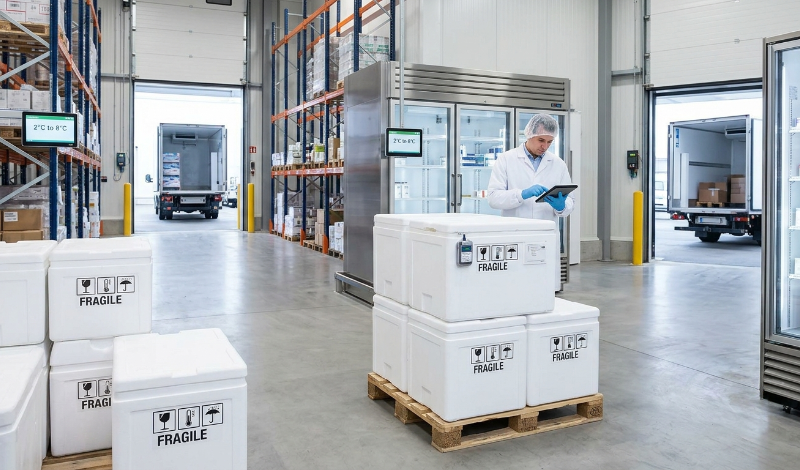
Pharmaceutical cold chain management involves maintaining appropriate temperature conditions during the storage, handling, and transportation of temperature-sensitive pharmaceutical products. Reliable cold chain operations require suitable packaging, temperature monitoring, qualified transportation systems, regulatory compliance, and coordination between suppliers and logistics providers. A structured approach can help pharmaceutical businesses protect product quality, minimize transportation risks, and support the timely delivery of medicines to international markets.
Pharmaceutical supply chains involve multiple stages, from manufacturing and procurement to storage and final distribution. Pharmaceutical cold chain logistics plays an important role in managing products that require controlled environmental conditions throughout their journey. Businesses must establish suitable handling procedures, verify transportation arrangements, and maintain accurate temperature records to help preserve product integrity during domestic and international shipments.
Understanding Pharmaceutical Cold Chain Requirements
Pharmaceutical cold chain management refers to the coordinated handling of products under specified temperature conditions. Certain pharmaceutical formulations may lose their quality or stability when exposed to temperatures outside their approved storage ranges.
Temperature-sensitive products may include vaccines, biological medicines, insulin, selected injectable formulations, and other pharmaceutical products requiring controlled storage.
Cold chain requirements depend on the product’s characteristics, stability data, and manufacturer-provided instructions. Some products require refrigerated conditions, while others may need frozen or ultra-low-temperature storage.
Important cold chain considerations include:
- Maintaining specified storage temperatures
- Using suitable packaging and insulation materials
- Monitoring environmental conditions during transportation
- Preventing exposure to unsuitable temperatures
- Maintaining product traceability
- Establishing appropriate handling procedures
Understanding these requirements before shipment can help businesses select suitable transportation methods and establish effective storage arrangements.
Importance of Temperature-Controlled Pharmaceutical Transportation
Temperature-controlled transportation is essential for products that require specific environmental conditions throughout distribution. Exposure to excessive heat, freezing temperatures, or prolonged temperature fluctuations may affect product stability.
Pharmaceutical businesses should evaluate transportation arrangements according to product requirements, shipment duration, destination conditions, and available logistics infrastructure.
Temperature-controlled transportation may involve refrigerated vehicles, insulated shipping containers, qualified packaging systems, and specialised air freight arrangements.
Businesses should consider the following factors when planning pharmaceutical transportation:
- Product-specific temperature requirements
- Shipment distance and expected transit time
- Packaging suitability for the transportation method
- Availability of temperature monitoring equipment
- Handling procedures at transit locations
- Emergency response arrangements
- Delivery schedules and receiving conditions
Transportation planning should also account for customs clearance and potential delays. Establishing suitable contingency arrangements can help businesses manage unexpected disruptions without compromising product handling requirements.
Evaluating Pharmaceutical Suppliers and Cold Chain Capabilities
Selecting an appropriate supplier is an important part of pharmaceutical procurement. Buyers should assess whether the supplier can meet product specifications, documentation requirements, and transportation expectations.
A pharmaceutical products supplier should be evaluated according to its sourcing capabilities, quality management practices, product portfolio, and ability to coordinate shipment arrangements. Businesses sourcing temperature-sensitive products should also confirm whether the supplier can support the required cold chain conditions.
Supplier evaluation may include reviewing:
- Product availability and specifications
- Applicable manufacturing and quality standards
- Relevant regulatory documentation
- Storage and handling capabilities
- Temperature-controlled packaging arrangements
- Shipment coordination and tracking
- Communication and technical support
Buyers should clarify responsibilities regarding product storage, packaging, transportation, and delivery before confirming an order.
A structured supplier evaluation process can help businesses identify suitable sourcing partners and establish clear expectations for pharmaceutical procurement.
Temperature Monitoring and Quality Assurance
Temperature monitoring helps pharmaceutical businesses verify whether products have remained within their specified environmental conditions during storage and transportation.
Monitoring systems may include calibrated data loggers, temperature sensors, monitoring devices, and digital tracking platforms. These systems can record environmental conditions at different stages of the supply chain.
The type of monitoring equipment depends on the product, transportation method, and applicable quality requirements.
Common temperature monitoring and quality assurance practices include:
| Practice | Purpose |
|---|---|
| Temperature data logging | Records environmental conditions during storage and transportation |
| Equipment calibration | Supports the accuracy of temperature measurements |
| Packaging qualification | Evaluates packaging performance under defined conditions |
| Shipment monitoring | Helps identify temperature deviations during transit |
| Documentation review | Maintains records of handling and transportation activities |
| Deviation management | Supports investigation of temperature-related incidents |
If a temperature deviation occurs, the affected products should be managed according to established procedures and applicable quality requirements. Businesses should avoid making assumptions about product suitability without appropriate assessment.
Maintaining accurate records can support traceability, quality reviews, and regulatory compliance throughout pharmaceutical distribution.
Managing Pharmaceutical Storage and Inventory
Pharmaceutical storage facilities must be suitable for the products they handle. Temperature-sensitive medicines may require dedicated refrigeration systems, controlled storage areas, and appropriate monitoring equipment.
Storage conditions should follow product-specific instructions and applicable regulatory requirements.
Effective pharmaceutical inventory management involves coordinating product availability, storage capacity, expiry dates, and purchasing schedules.
Businesses should consider the following practices:
- Maintaining appropriate storage conditions
- Monitoring temperature fluctuations
- Organising products according to storage requirements
- Tracking batch numbers and expiry dates
- Applying suitable inventory rotation procedures
- Maintaining accurate stock records
- Establishing procedures for handling damaged or affected products
Inventory planning can help businesses reduce unnecessary storage pressure and manage product availability more effectively.
For temperature-sensitive pharmaceutical products, inventory decisions should also consider the available cold storage capacity and expected replenishment timelines.
Pharmaceutical Distribution and International Supply Chain Coordination
Pharmaceutical distribution involves coordinating the movement of products from manufacturers or sourcing partners to importers, wholesalers, distributors, and other eligible buyers.
Businesses requiring pharmaceutical distribution services should evaluate the supplier’s ability to manage product sourcing, storage, shipment preparation, documentation, transportation, and delivery coordination.
Distribution arrangements may vary according to the pharmaceutical product, destination market, and business requirements.
Important distribution activities include:
- Procurement and order coordination
- Inventory planning and product availability management
- Packaging and shipment preparation
- Documentation and compliance coordination
- Transportation planning
- Delivery scheduling and shipment tracking
- Communication between supply chain participants
International pharmaceutical distribution may also involve customs clearance, import permissions, product registration, and destination-specific regulatory requirements.
Businesses should establish clear responsibilities between suppliers, logistics providers, and importing partners. This can help minimise operational uncertainties and support more efficient supply chain coordination.
Pharmaceutical Export Requirements and Global Market Access
International pharmaceutical exports require coordination between suppliers, buyers, logistics providers, and regulatory authorities. Export requirements depend on the pharmaceutical product, importing country, and applicable regulations.
Before arranging an international shipment, businesses should verify whether the products meet the requirements of the destination market.
Common pharmaceutical export documentation may include:
| Document | General Purpose |
|---|---|
| Commercial Invoice | Provides details of the transaction and product value |
| Packing List | Specifies shipment contents and packaging details |
| Certificate of Analysis | Provides batch-specific analytical results |
| Certificate of Origin | Identifies the country of origin |
| Manufacturing Licence | Provides information about authorised manufacturing activities |
| GMP Documentation | Supports evaluation of applicable manufacturing quality systems |
| Product Registration Documents | Support verification of regulatory status in the destination market |
Additional documentation may be required depending on the product and importing country.
Businesses should also consider transportation costs, delivery timelines, insurance arrangements, and customs procedures when planning international shipments.
Building Reliable Pharmaceutical Supply Relationships
Pharmaceutical procurement and distribution often involve recurring business requirements. Importers, distributors, and pharmaceutical companies may need to manage changing demand, product availability, storage capacity, and transportation schedules.
Developing reliable supply relationships requires regular communication, clear commercial terms, and consistent evaluation of operational capabilities.
Long-term supply planning should focus on:
- Consistent product specifications
- Appropriate quality assurance procedures
- Reliable inventory management
- Accurate regulatory documentation
- Suitable transportation arrangements
- Clear communication between business partners
- Effective demand forecasting
Businesses should periodically review their sourcing and distribution arrangements to ensure that they remain aligned with changing operational requirements.
Working with suitable pharmaceutical partners can help businesses coordinate procurement activities, maintain product quality, and improve supply chain efficiency.
Frequently Asked Questions (FAQs)
What is pharmaceutical cold chain logistics?
Pharmaceutical cold chain logistics involves the storage, handling, monitoring, and transportation of pharmaceutical products under specified temperature conditions to help maintain their quality and stability.
Why is temperature monitoring important in pharmaceutical transportation?
Temperature monitoring helps identify environmental deviations that may affect product stability. Accurate records support quality assessment, traceability, and appropriate handling decisions.
Which pharmaceutical products require cold chain management?
Products such as vaccines, certain biological medicines, insulin, and selected injectable formulations may require controlled temperature conditions. Requirements depend on product-specific storage instructions.
What should businesses consider when selecting a pharmaceutical supplier?
Businesses should evaluate product availability, quality standards, regulatory documentation, sourcing capabilities, storage arrangements, transportation support, and communication.
What are the major challenges in pharmaceutical cold chain distribution?
Common challenges include temperature fluctuations, transportation delays, inadequate storage infrastructure, packaging limitations, customs clearance, and coordination between supply chain participants.
Reliable pharmaceutical supply chains depend on appropriate sourcing, quality assurance, temperature monitoring, and effective distribution planning. Businesses that establish structured cold chain procedures can better manage transportation risks, maintain product integrity, and coordinate international procurement requirements.
Working with an experienced pharmaceutical exporter from India can help international buyers evaluate pharmaceutical sourcing opportunities and coordinate export requirements. By reviewing supplier capabilities, confirming product specifications, and establishing suitable transportation and documentation procedures, businesses can develop dependable pharmaceutical supply networks that support consistent product availability across global markets.